UXPortfolio Roast · Live mock interview · Burnaby · Nov 2025
Portfolio Roast: A Live Mock Interview & Fireside Talk for UX Designers
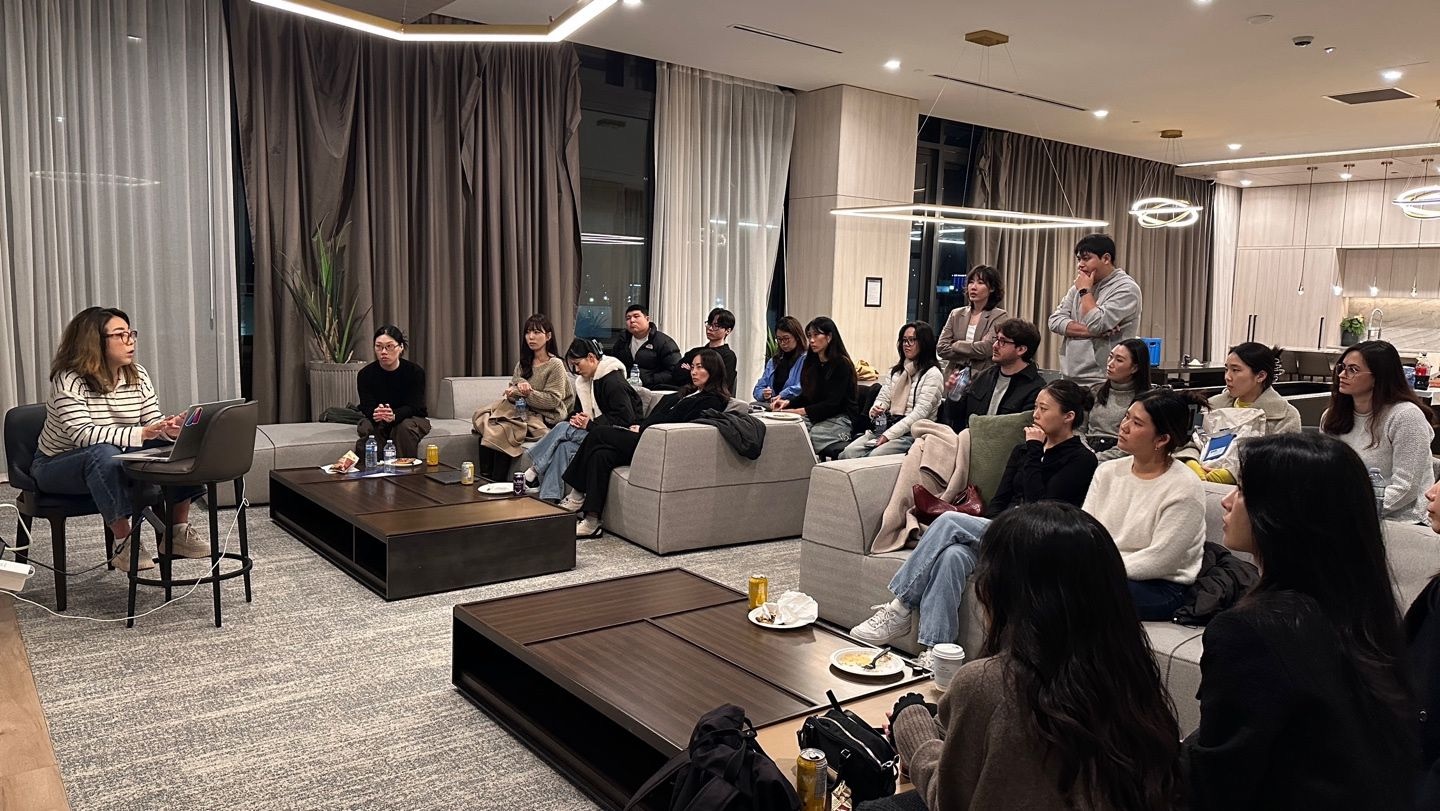
I worked on the organizing team for Portfolio Roast, a live mock interview and fireside talk for more than 20 designers in Burnaby. Two designers presented real case studies to Carlos Melendez, Principal User Experience Designer at Oracle. The format made the questions behind portfolio evaluation visible to everyone in the room.
A polished portfolio can still break under questions
Portfolio work is usually done alone. Designers can spend weeks editing a case study, but they often do not learn how the story lands until a real interview begins.
The event gave designers a lower-stakes place to test that moment. Portfolio Roast put real case studies into a live interview setting, then opened the questions and feedback to the room so everyone could learn from the same conversation.
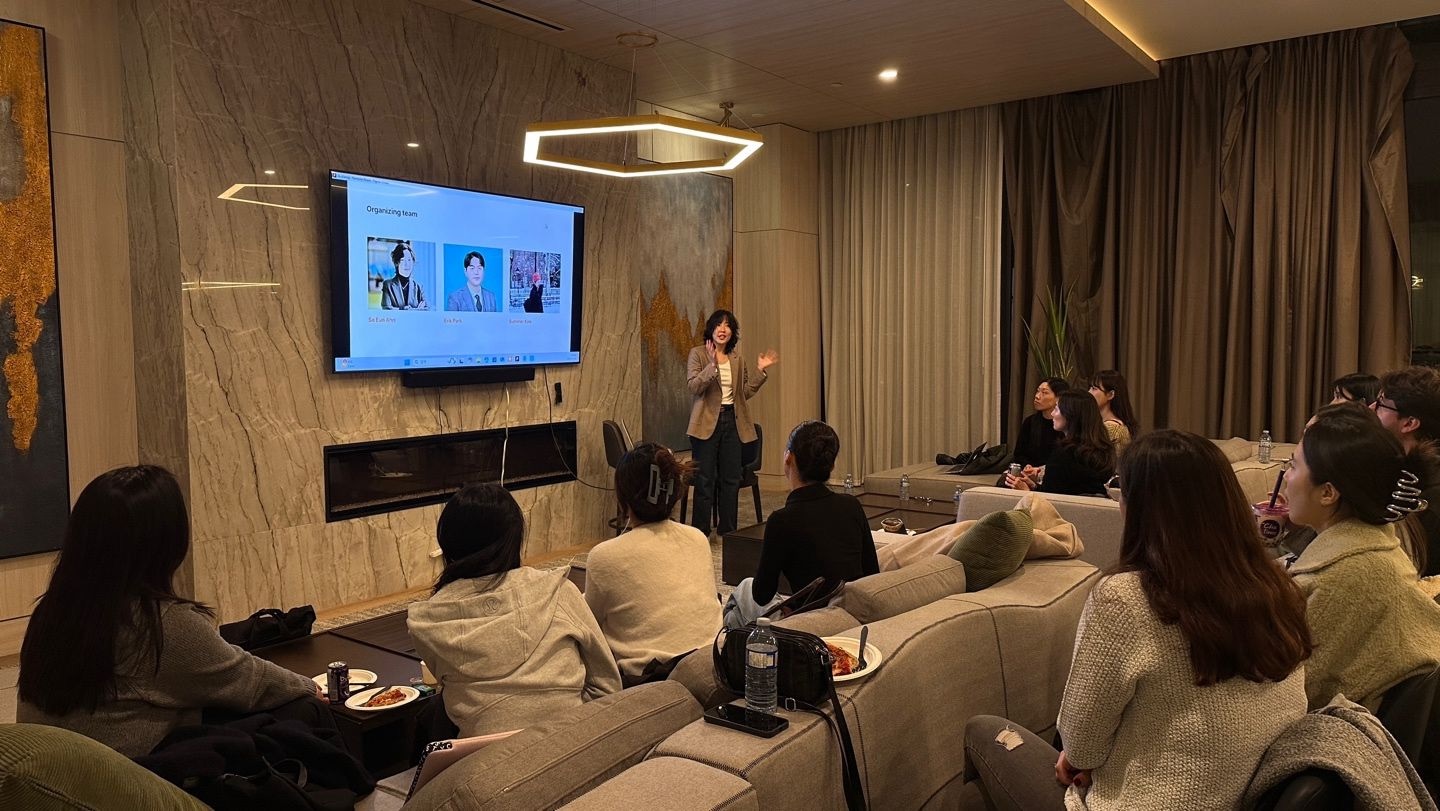
So Eun Ahn brought together the guest, presenters, and community. I worked with So Eun and Suryeon Kim on the organizing team, helping shape the program flow and support event operations. KDNEW joined as event partner. The official event page listed 25 attendees, and the event recap confirmed that more than 20 designers joined us that evening.
We put the portfolio into an interview, not a slideshow
Hayley Lee and Sue Lee each presented a portfolio case study in front of the room. Carlos responded as an experienced interviewer would: he listened to the story, asked for missing context, and gave direct feedback on what made the work easier or harder to evaluate.
The live format widened the value of each critique. A question asked of one presenter was useful to everyone. People could see where a polished screen still needed a clearer decision, where the outcome needed stronger evidence, and where the story became easier to follow once the presenter explained the context aloud.
The fireside talk started from the work everyone had just seen
After the presentations, the conversation moved from the individual case studies to the wider questions designers were already bringing into interviews and day-to-day work.
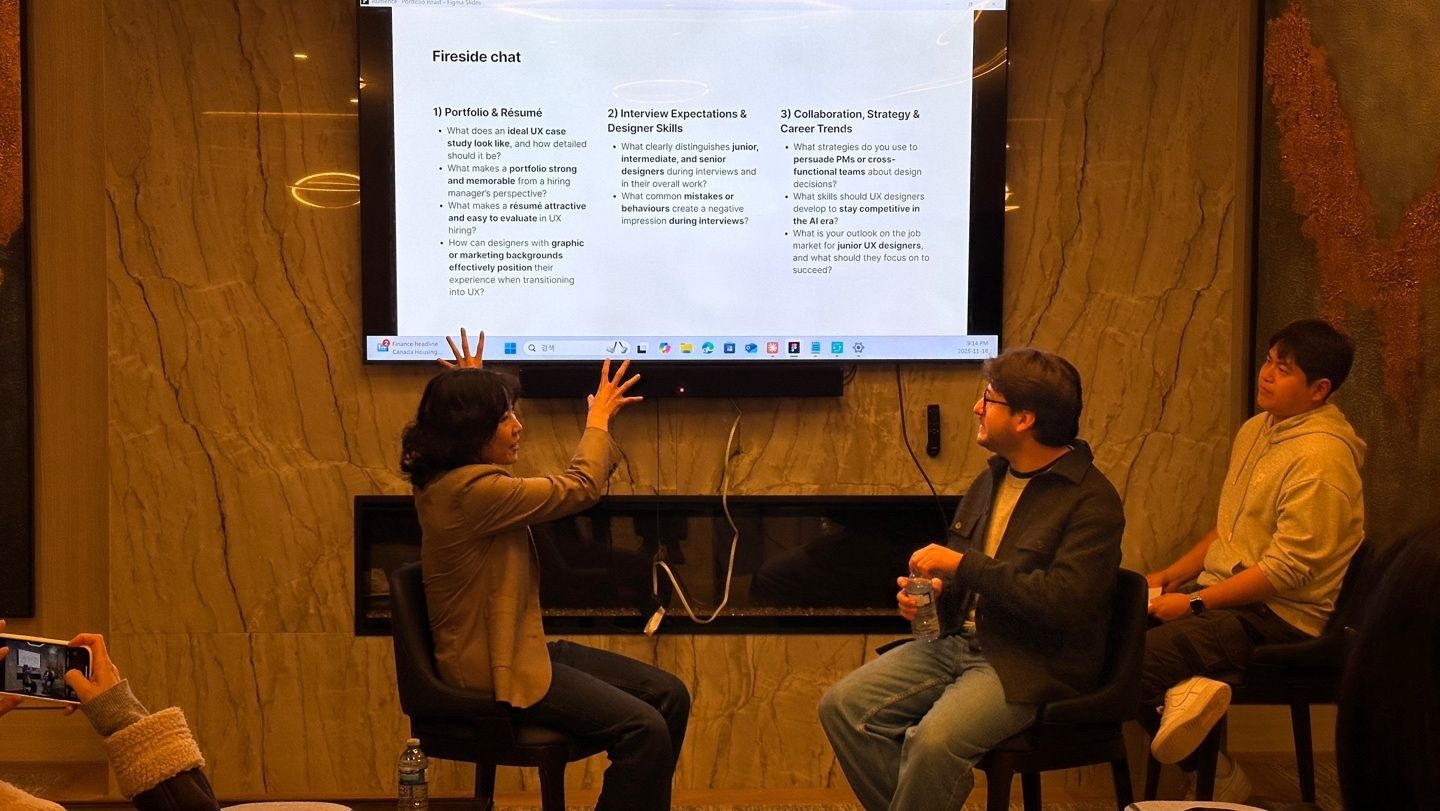
We discussed how much detail a case study needs, what makes work memorable, and how experience in graphic design or marketing can be positioned for UX roles.
From there, the questions widened: what separates junior, intermediate, and senior designers, which interview behaviours create a negative impression, how to explain decisions to cross-functional partners, and what to focus on in a difficult job market.
The timing mattered. These were not abstract career questions asked at the beginning of the night. Everyone had just watched two real stories being presented and questioned, so the advice had something concrete to attach to.
One presenter's questions became useful to the whole room
Portfolio feedback is often a private exchange between a reviewer and one designer. Here, more than 20 people could watch the same story, hear the same question, and compare it with their own work.
That made the room feel less like a panel and more like a working session. The presenters were generous enough to show unfinished parts of their stories. The audience listened closely, asked follow-up questions, and stayed for the conversations that continued after the formal program.
In a later LinkedIn recap, Sue described Portfolio Roast as her first solo presentation of Lento. One person's post cannot represent every participant, but it shows one concrete outcome: the event gave a presenter a lower-stakes place to practise a difficult story before the next real interview.
A portfolio review has to include the questions
A useful portfolio review cannot stop at making the page look more polished. It has to test whether the designer can explain the problem, the decisions, and the evidence when another person starts asking questions.
The event did not produce one portfolio template, and that was never the goal. It made the evaluation process visible: what an interviewer asks, what evidence a story needs, and where context changes how work is understood.
As an organizing team member, that was the outcome I cared about: giving designers a place to put unfinished stories in front of real questions, hear direct feedback, and decide what to practise next.